Tuesday, June 7, 2016
Week Two
This past week we went on an overnight trip where we went to Roquefort and visited multiple different farms and met different officials. Agriculture is connected to everything in some sort of fashion and farming is a way of life and sometimes people forget that. Farmers work hard to produce the best quality product they can then turn around and sell it to the public. This produce then goes straight to the consumers or goes to restaurants where it is prepared for them. At the restaurant we went to Thursday night, they were using all local products to prepare dinner; and this place is not the only place I have seen this. Every where we go people use local products and simply look at you with blank stares if you ask them where it is from. They seem to be very prideful that their products are all local and I personally like that everything is local. With everything being local fruits and vegetables have seasons, like they are supposed to, and are not available all year round. This allows farmers to let the produce ripen on the vine and not in cold storage, so needless to say the produce here actually has very good flavor. Another thing that is really neat to me is that farmers know how to use the land to their advantage. In one place we went the owner had natural spring water that you could drink from straight from the creek that flowed through his land that he used for his garden and to water his flock of sheep. At Roquefort where they produced the cheese they made it in a cave on planks of salted wood. It really amazes me to see people being resourceful and not very wasteful like some people I know in the U.S. This is definitely something I will be taking home by working with the land, while producing the best possible product for people to enjoy.

Blog Numero Dos
As an American culture, we fill our atmosphere with diversity yet it's very short lived. The French culture is quite historical and has many generations specializing in different fields. The one in particular is the cheese industry. The cheese production in Roquefort is well renowned but the foundations go farther than I believe the United States is capable. The process starts from the milk from sheep where we visited and saw the milking of these sheep. The milk undergoes a special process to produce the cheese where The production takes place in an underground cave that has been used for centuries. The cave was a natural occurrence. The elements that provide the perfect environment for the cheese production could never be naturally recreated. The United States lacks any history like the French since America was built upon the hard work of the individual and the entitlement to nothing. Business in France was passed down from father to son. The land and the production secrets were passed down through the generations to what we experience today from this cheese plant. Americans have always valued freedom. The lesser of government intervention is a part of American capitalism while the French government seems to control a majority of the French economy. Each has its benefits and its downsides. The French government plays a crucial role in protecting the cheese industry traditions and prestige with its strict regulations that would never be possible in the United States. Plus the United States lack of historical culture would leave no place for cheese consumption. Americans eat sundaes, cookies, cake, brownies, etc. after a meal. There is no place for a healthy dessert such as cheese in our "American" diet. The cultured cheese of France takes time and care; something that has been replaced by mass consumption in the United States.


Monday, June 6, 2016
Week two in the Tour
After an eventful first week ending in Luchon, I would arrive in Toulouse in time for a second shot at the Opera. It was my first time attending such event.
Our seats were in the nose bleeds which at first I didn't mind but it became uncomfortable after the first half. During intermission a couple of us snuck down to the very first row. From a different perspective the opera became much more entertaining. I appreciated the actors ability but not speaking French made it a little difficult to fully understand what it was about. A big culture difference from the US I to notice was not only their tolerance but admiration of a naked women in the opera. Early there were a couple topless scenes but during the second half one women stripped completely down. I payed very good attention for the rest of the show.
On Monday we visited a 400 hectare farm in the country side, an area that resembled Tuscany. We discuss much about policy and comparing the large scale farms in the US. Last week when we visited the Chamber of Agriculture they made it seem like they helped farmers every step of the way, however, the owner of this "large scale" farm told us working with them is very difficult. He wasn't aided with subsidies as he was told when converting from conventional to organic farming. Makes you wonder if chamber of Ag are just like another politicians. Later that day we toured Carcassonne and the extraordinary castle that surrounds the old town. It was like stepping into Game of Thrones. The shear scale of it indulged me in reminiscence.
Tuesday we visited an ecology research center in the Pyrenees. One of their main focus was salamanders. Deep in a cave in a mountain we examined and played with different species of cave salamanders. It was very intriguing seeing how they live in complete darkness. Our tour guide, a doctor heading the program, gave us a very in depth history and current research seminar. It was a little too much as this man was obviously very passionate about the creatures.
Wednesday we had a late start. Our trip was to the waste water treatment plant. This was particularly my least favorite. I have been to a plant as such before and seeing it for a second time wasn't anything I wanted to do. The following day we left for the Cévennes Mountains. There our professor had many connections with local politicians and farmers. This was my favorite time during the program thus far. All the different rural Ag production systems was very fascinating and something I had never seen before. The area was beautiful as well. One thing that remains current in France and that is the emphasis on tradition. This trip was an over nighter with the following day we visited in my opinion the greatest farm I've seen. It was nestled in a rural valley with a grain mill from the Roman times and a drinkable natural spring. The most unbelievable aspect of the property was that it only cost €11,000. After viewing organic bee production, which may have been the coolest Ag production of the trip so far. There they still practiced the tradition bee hive with native bees. I respect the desire to continue unique traditions. If not for people like that farmer those would all be lost to museums and history books. The long drive home awaited after a full day. Everyone seemed to be either on edge or asleep. Week two came to a conclusion.
Our seats were in the nose bleeds which at first I didn't mind but it became uncomfortable after the first half. During intermission a couple of us snuck down to the very first row. From a different perspective the opera became much more entertaining. I appreciated the actors ability but not speaking French made it a little difficult to fully understand what it was about. A big culture difference from the US I to notice was not only their tolerance but admiration of a naked women in the opera. Early there were a couple topless scenes but during the second half one women stripped completely down. I payed very good attention for the rest of the show.
On Monday we visited a 400 hectare farm in the country side, an area that resembled Tuscany. We discuss much about policy and comparing the large scale farms in the US. Last week when we visited the Chamber of Agriculture they made it seem like they helped farmers every step of the way, however, the owner of this "large scale" farm told us working with them is very difficult. He wasn't aided with subsidies as he was told when converting from conventional to organic farming. Makes you wonder if chamber of Ag are just like another politicians. Later that day we toured Carcassonne and the extraordinary castle that surrounds the old town. It was like stepping into Game of Thrones. The shear scale of it indulged me in reminiscence.
Tuesday we visited an ecology research center in the Pyrenees. One of their main focus was salamanders. Deep in a cave in a mountain we examined and played with different species of cave salamanders. It was very intriguing seeing how they live in complete darkness. Our tour guide, a doctor heading the program, gave us a very in depth history and current research seminar. It was a little too much as this man was obviously very passionate about the creatures.
Wednesday we had a late start. Our trip was to the waste water treatment plant. This was particularly my least favorite. I have been to a plant as such before and seeing it for a second time wasn't anything I wanted to do. The following day we left for the Cévennes Mountains. There our professor had many connections with local politicians and farmers. This was my favorite time during the program thus far. All the different rural Ag production systems was very fascinating and something I had never seen before. The area was beautiful as well. One thing that remains current in France and that is the emphasis on tradition. This trip was an over nighter with the following day we visited in my opinion the greatest farm I've seen. It was nestled in a rural valley with a grain mill from the Roman times and a drinkable natural spring. The most unbelievable aspect of the property was that it only cost €11,000. After viewing organic bee production, which may have been the coolest Ag production of the trip so far. There they still practiced the tradition bee hive with native bees. I respect the desire to continue unique traditions. If not for people like that farmer those would all be lost to museums and history books. The long drive home awaited after a full day. Everyone seemed to be either on edge or asleep. Week two came to a conclusion.
| European Cave Salamander |
| Traditional Bee Hive |
Sunday, June 5, 2016
Week 2 in France
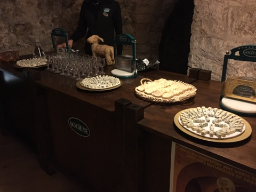
Cheese is very popular in France, it is used in many desserts and dinner recipes. Societe is a company that makes their cheese inside a cave. The cave has been used to make Rouqefort Cheese for several years. The cave system Societe uses to produce Roquefort Cheese is a well developed combination of traditional storing methods, and improved penecillium mold cultivation using rye bread. Inside the cave we were able to see remninants of the old wooden storage shelves that had long been replaced. During the tour we were able to taste three different forms of the cheese. Each form of the cheese had a specific form of penecillium cultivated for a specific taste. The cheese is similar to blue cheese in America, but it is more rich and flavorful. In America most cheese is developed and processed in a factory using new sciences, and technology. I find it interesting that Societe has been able make Roquefort cheese inside of a cave for over a 100 years without drastically changing the production method. The penecillium is grown using rye bread, and cultivated and selected in a lab. The cultivation method allows them to sell Roquefort Cheese throughout the year. In France there seems to be a great desire to continue the use of traditional production methods, and this is not only aparent in the Societe Cheese Company, but in French agriculture as well.
Cheese and Tradition
Tradition. Tradition is beliefs, customs, or ideas passed down from one generation to another. Tradition is a word that every Texas Aggie holds near and dear to them because it is what Texas A&M is based on. With all this being said, it was amazing to go to the mountains and watch the production of cheese by Roquefort Société because the production of the cheese itself was based off of tradition. It was traditional to make the cheese in cave that is hundreds of years old like it is traditional for Aggies to mourn the loss of fellow aggies together (Mustard and Silver Taps). It was traditional to only use resources on the mountains like it's traditional for Aggies to quote the phrase "An Aggie never lie , cheat, steal, or tolerate those who do." Being in that cave, allowed me to see up close and personal the value of tradition in cheese production, which is not something that Texans can say they see a lot of. Watching a mass production business uphold strong traditional values throughout the changing times without much civil backlash was a new thing to see because in Texas, traditions in the food production industry has to change in order to appease the masses. Nothing can stay the same in Texas unlike the cheese production in the French Mountains


Wednesday, June 1, 2016
Blog #1: Week One in Toulouse, France
Howdy! This trip was sponsored by yours truly and 6 other members. I wonder if the French government would have sponsored us if we were coming from France rather then to it... Anyways, the first week in France took place in Toulouse. Starting on Sunday, we investigated a nice farmers market. Something I've never actually seen before. Sure I've gone to a few open markets in the United States but nothing like what I experienced in the streets of France. The market had chicken, fruits, and vegetable. The freshest money could buy. Local, imported, they had it all.


Toulouse as a city was eye-catching. The building were well cultured and the roads were just like the movies. Everything was within walking distance and the living spaces were usually located on top of the shops creating multi-story building everywhere.
 |
| The picture autocropped out the bottom half of the picture and I don't know how to fix it becaue All the instructions and controls are in French... But enjoy! |
Next we visited a French agriculture building which informed us of the French regulations in the United States. Since I actually don't own a farm, some of the regulations were new to me. The crops around the northern region were wheat,canola,sunflower,and wine, and corn and cattle in the south. . While corn is a huge product in the United States, it is only used for feed here in France. And each product has a history here in France. The cheese and wine can only be produced in the areas it was originally being created much like a permanent patent in the United States. The government is also supporting small local farmers to get started by giving them funds to start their own plantations. Aside from the positives, there are some negatives here in France. The farmers have to ask for a certain amount of water like asking for a grant in the United States but i'll get to that later.
Like I was saying before researchers in the United States must "ask" the United States for funding. But here in France, the government has put billions into agriculture. The tour with Dr. Matthieu and his research facility was truly amazing. The technology they had was top of the line, each sector had a full staff. They had a staff just for using the DNA equipment. The United States' researchers must ask for their funding through grants which tell the government what they want, how they'll get it, the process, and how that information will help them solve the problem, etc. This gives the French a huge advantage in this field because the time it takes the United States to write a grant, the French can skip and continue with their "free" equipment.
The final leg of our journey was a visit to a local farmer's 3 acre plot and a magnificent garden. In France, the produce is more local and a higher percentage is organic. Is organic really that much better? I guess it's up to personal opinion... Moving on. The garden was my favorite place so far. The division of the garden into continents and showing plants grown in each place was brilliant! In the United States there may be gardens but none I've seen as magnificent and diverse as this.
Toulouse First Week
 On Sunday 22, our first day in Toulouse we went to visit the local farmer markets. Two of them were cheaper and outdoors; just along the sidewalk of the street, and one was a more expensive one but in a supermarket type of setting. In contrast the supermarket each seller rented a space and outdoor market simply allowed people could go in a space and start to sell, but both ways sellers were able to sell their product and compete against other sellers directly. The effect this type of market produces in the economy is great, because it stops big monopolies from coming and taking over the trade and managing prices as they wish.
The small farmers are the ones that benefit the most from this system, since even though they are producing so little they could go themselves to sell their produce once they harvest, or have another person selling their product at the market price and not letting a big corporation take the revenue away from them. Also with this system there could be a chance for entrepreneurs to start their own market sale with a demand for the products from consumers and the supply by the farmers.
I believe this system will work in Mexico very well, since there are many rural people that have small farms and have no place to sell them, and since labor is so cheap they could find a better living by simply farming a small piece of land and selling them in a local market at a reasonable price than getting paid a ridiculously low amount of money per week.
Subscribe to:
Posts (Atom)